


-
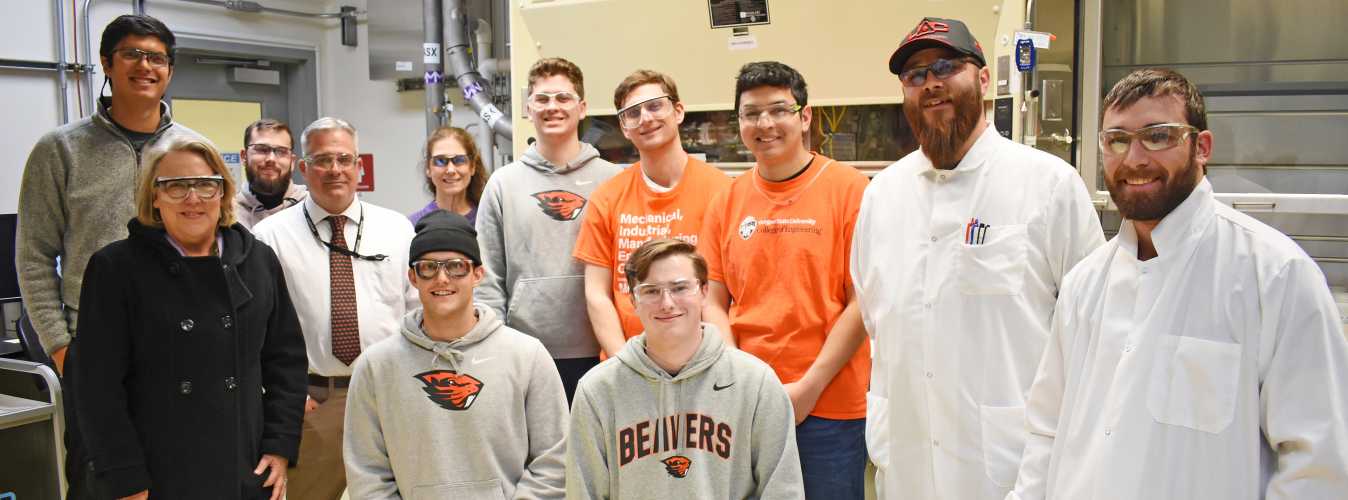
Oregon State Students Partner with Vit Plant Engineers
Vit Plant teams have partnered with Oregon State University students on their senior capstone project. The students recently visited the Vit Plant, where they got hands on experience with the vital sampling systems.
-

Vit Plant Donates $23,000 to Toys for Tots
Team members at the Vit Plant donated more than $23,000 in toys and cash to the U.S. Marine Corps Reserves’ Toys for Tots and Local 598’s Bikes for Tikes campaigns.
-
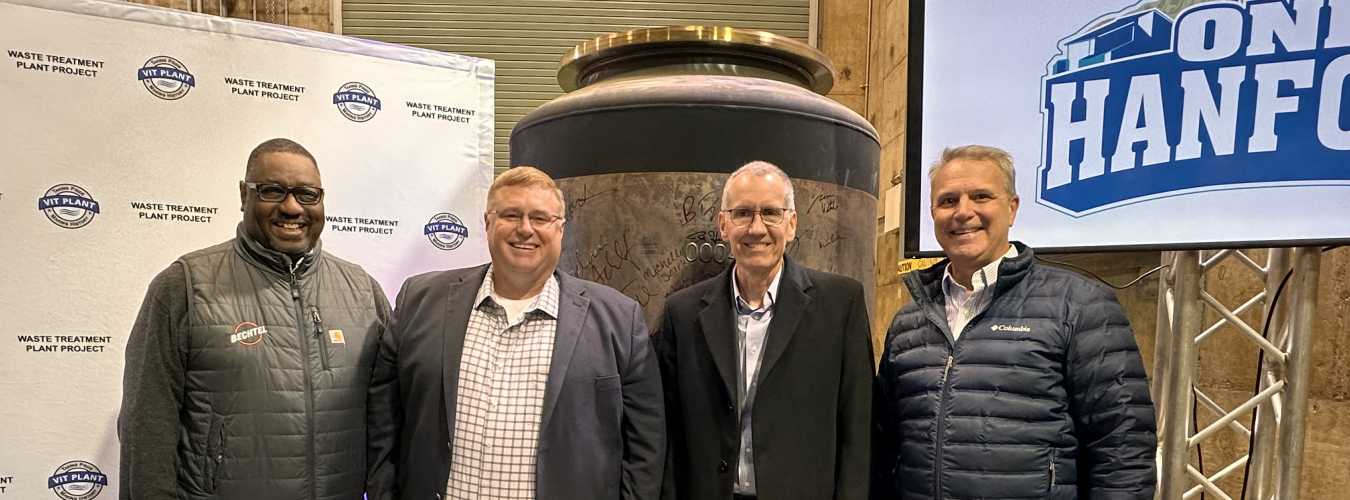
First Test Glass Container at Vit Plant
The Vit Plant team hosted a media event to celebrate the first container filled with test glass poured from Melter 1! Attendees signed their names on the container and celebrated the indelible mark they have left on Hanford history.
-

First Pour of Melter Test Glass
Vit Plant crews made the first pour of melted test glass into a container – a huge step toward treating radioactive tank waste at Hanford. This video shows the melter pour stream camera showing the first molten stream pouring into a container.
The Vit Plant
Virtual Tour
Direct Feed LAW
Our Employees
Systems Engineering Manager