


RICHLAND, Wash.—Workers completed placing refractory in the two, 300-ton melters at Hanford’s Low-Activity Waste (LAW) Vitrification Facility.
Refractory is the fire- and heat-resistant brick that lines the inside of the melters, which will heat liquid radioactive waste and glass-forming materials to 2,100 degrees Fahrenheit. The molten slurry will be poured into containers where it will be allowed to cool and solidify. Then it will be shipped to an onsite repository for disposal.
The LAW Facility is part of the Hanford Waste Treatment Plant, also known as the Vit Plant. The LAW Facility contains two melters that have the capacity to fill 4.5 waste canisters per day when the facility is operational.
Each LAW container is 7 feet tall, 4 feet in diameter and holds 7 tons of glass.
The next step is to complete refractory placement in the melter lids, then place the lids on the melters.
Considered the heart of the vitrification process, the waste processing melters will be the largest in the world once the facility is operational.
About 56 million gallons of liquid radioactive waste stored in 177 underground tanks at Hanford will be treated and solidified in the LAW and one other Vit Plant facility.

Melter 1 was moved into LAW in 2012.
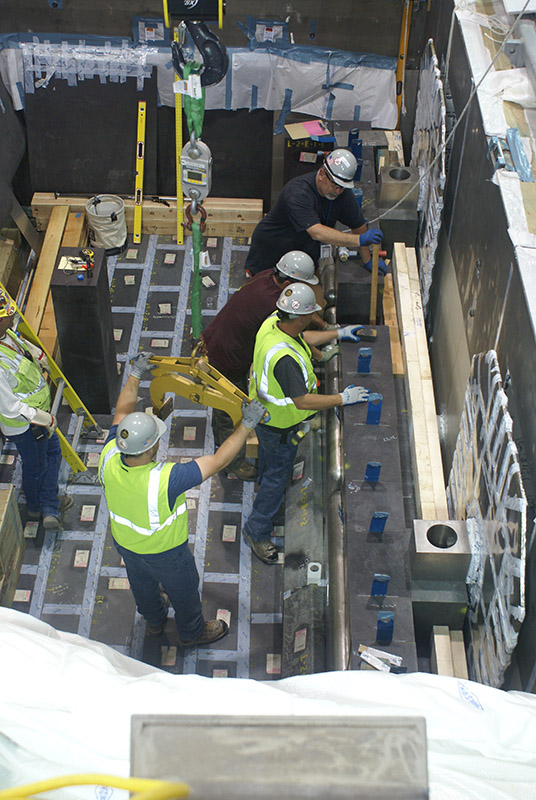
Workers place refractory in one of the 300-ton waste melters in LAW in late 2014.
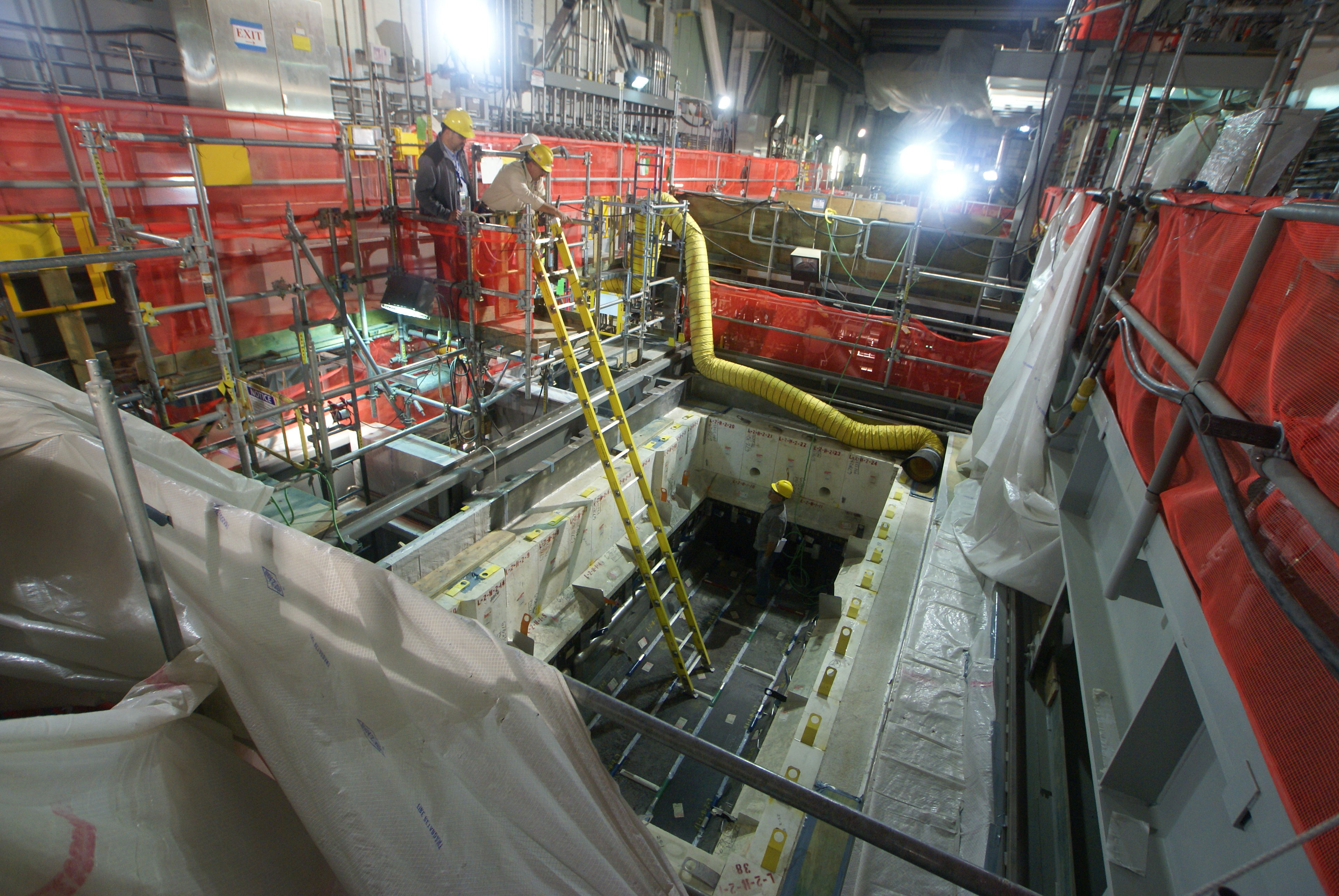
Workers assess status of one of the LAW melters in early 2015.